%20(1).avif)
Plumbing
Plumbing


Sewer & Drain
Sewer & Drain
Water Heaters & Treatment
Water Heaters & Treatment
Contact Us
Contact Us
Contact Us
Contact Us
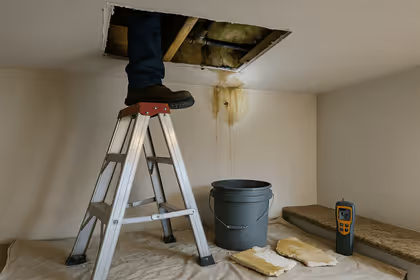





Hidden leaks rarely show up in a straight line. A wet baseboard in one room may start from a pipe in another. A warm floor may point to a hot-water slab leak several feet away from the actual damage. Doheny treats leak detection as diagnosis first, not demolition.

You should not have to approve wall openings or floor cuts just to find out whether there is a leak. Doheny's process confirms the problem, narrows the location, and gives you practical repair options before the messy work begins.

We start with what you have noticed: higher water bills, damp flooring, warm tile, mildew smells, low pressure, a spinning meter, or stains on walls and ceilings. A licensed plumber then inspects fixtures, shutoff valves, toilets, hose bibs, water heater connections, and supply lines, then uses the meter, pressure tests, and isolation valves to determine whether the leak sits on the hot side, cold side, main line, slab line, fixture line, or drain side.
Depending on the symptoms, we use acoustic listening equipment, electronic line tracing, moisture meters, thermal imaging, pressure testing, or video camera inspection to gather evidence before opening any surface. Once we narrow the source, we mark the area and walk you through what we found. If more than one leak is possible, we tell you plainly.
After diagnosis you get a clear recommendation and upfront pricing. If a targeted pipe repair is the right call, we usually handle it directly. If the better answer is a reroute, repipe, or restoration coordinated with insurance, we explain why.
A small pressurized pipe leak can waste hundreds or thousands of gallons before it becomes visible. If usage stayed the same but the bill jumped, the plumbing system needs to be tested.
Turn off faucets, appliances, irrigation, and ice makers, then check the meter. If it continues moving, water may be escaping somewhere in the system.
Leaks under slabs and behind walls often show up as sound before they show up as water. Acoustic detection equipment helps us follow that sound to the source.
Warm tile or flooring can point to a leaking hot-water line under the slab. Damp carpet, cupping wood floors, or soft spots may mean the leak has already reached the surface.
Musty odors, bubbling paint, swollen baseboards, ceiling stains, or recurring mold can all come from slow leaks behind finished surfaces.
A sudden drop in pressure can mean water is escaping through a broken line, especially when paired with a high bill, wet soil, or meter movement.
Saturated soil, greener patches of grass, sinking concrete, or water near the meter box can point to a main water line or irrigation leak.
.avif)
.avif)
Slab leaks are common in Orange County because many homes run water lines below the concrete foundation. Age, soil movement, water pressure, corrosion, poor installation, and shifting ground can all stress those lines over time. Once a pipe fails under the slab, the water has nowhere friendly to go. It can lift flooring, crack tile, soak baseboards, damage cabinets, and create mold conditions long before the leak is easy to see.
.svg)
Doheny locates slab leaks before repair begins. We test pressure, listen through the slab, compare hot and cold lines, look for warm-floor patterns, and use moisture readings to understand where the water is traveling. That diagnosis matters because the wet spot is not always the break point. Cutting in the wrong area turns a leak repair into a bigger construction project.
Once the leak is confirmed, we explain the repair choices in plain language. Some slab leaks can be fixed with a targeted access point. Others are better handled with a line reroute through the wall or attic so the failing under-slab pipe is abandoned. If the home has multiple aging lines, we may recommend a broader copper pipe repair or repipe conversation instead of treating every leak as a one-off emergency.
Why Doheny for slab leaks: more than 40 years serving Orange County homes, 24/7 response for active water damage, licensed and insured plumbers, upfront pricing before repair work starts, and the ability to move from diagnosis to repair without handing you off to another company.
Finding the leak is only half the job. The other half is understanding why it happened so the repair lasts. Orange County homes see a few recurring leak causes, especially in older neighborhoods, slab-on-grade homes, and properties with high water pressure.
Aging copper or galvanized lines. Older metal pipes can thin, pit, corrode, or develop pinhole leaks over time. If one line has failed, it is worth checking nearby lines for similar wear.
High water pressure. Excess pressure puts stress on fittings, joints, supply lines, valves, and copper pipe. If pressure is too high, repairing the leak without correcting the pressure can lead to another failure.
Soil movement and slab stress. Pipes under concrete can rub, bend, or crack as soil shifts. This is one reason slab leaks need careful location work before repair begins.
Fixture and appliance failures. Toilets, faucets, washing machines, dishwashers, ice makers, and water heaters all have supply lines and valves that can leak quietly until damage spreads.
Drain and sewer line problems. Not every leak is a pressurized water line. Cracked drains, loose fittings, failed seals, and sewer line breaks can create moisture, odors, and staining even when the water meter does not move.
Poor previous repairs. Temporary patches, mismatched materials, bad solder joints, and rushed remodel plumbing can all fail later. Doheny checks the repair history when visible work suggests a recurring problem.
Old-school leak hunting often meant opening the wall, floor, or ceiling where the water appeared and hoping the pipe failure was nearby. That approach can work when the leak is exposed, but it gets expensive fast when the water has traveled through framing, insulation, cabinets, or concrete.
Electronic leak detection gives the plumber better evidence before demolition. Acoustic equipment listens for pressurized water escaping from the pipe. Pressure testing confirms which line is losing water. Moisture readings show where water has spread. Thermal imaging can help identify temperature differences from hot-water leaks. Camera inspection can confirm drain and sewer problems from inside the pipe.
No tool sees every leak through every material. A good diagnosis comes from combining tests until the evidence points to the most likely source. For the homeowner, that means fewer unnecessary holes, a smaller repair area, a clearer insurance conversation when water damage is involved, and a better chance of fixing the actual failure the first time.
Leak detection should end with a decision, not confusion. Once Doheny locates the problem, we explain what is leaking, how urgent it is, and what repair options make sense for your home.
For a small accessible leak, the answer may be a same-day pipe repair, valve replacement, fixture repair, or supply-line replacement. For a slab leak, we may recommend a targeted access repair if the location is practical and the surrounding pipe is still healthy. If the under-slab line is old, hard to reach, or likely to fail again, a reroute can be the cleaner long-term fix. For buried main water line leaks, we look at pipe material, depth, route, and age before recommending repair or replacement.
If water damage has already affected flooring, cabinets, drywall, or baseboards, we can help you understand what needs plumbing repair versus restoration work. We document what we find, explain the next step, and keep the scope clear so you are not guessing while the damage gets worse.
Some leaks can wait until morning. Active water damage cannot. Call Doheny right away if water is spreading across the floor, dripping from the ceiling, soaking cabinets, damaging electrical areas, or causing the meter to spin even after fixtures are shut off.
Our team is available 24/7 for emergency leak detection across Orange County, with a 30-minute target response time when the situation is urgent. We will help you shut down the right valve, protect the home from additional damage, and identify the source as quickly as possible. If the full repair cannot be completed immediately, we will stabilize the system and explain what needs to happen next.
Fast response matters because hidden leaks rarely stay small. Water can travel behind walls, under floors, and through slab cracks before it shows itself. The sooner the source is isolated, the better chance you have of limiting repairs to plumbing and avoiding a larger restoration project.
How do I know if I need leak detection?
Call for leak detection if your water bill jumps, your meter moves when everything is off, you hear running water, smell mildew, see stains, notice damp flooring, or feel a warm spot on the floor. Those symptoms usually mean water is escaping somewhere you cannot easily see.
Can you find a leak without opening the wall or floor?
Often, yes. Doheny uses pressure testing, acoustic listening equipment, moisture readings, thermal clues, and camera inspection where appropriate to narrow the leak location before opening surfaces. Some access may still be needed for the repair, but detection should reduce unnecessary demolition.
What are the signs of a slab leak?
Common slab leak signs include warm floor spots, unexplained water bills, the sound of running water, low pressure, damp carpet, cracked tile, musty odors, or water pooling near the foundation. A slab leak should be checked quickly because water can spread under flooring and through the foundation area.
Is leak detection the same as leak repair?
No. Leak detection is the diagnostic step: finding the source and cause. Leak repair is the actual fix. Doheny can usually handle both, but the right repair depends on what failed, where it is located, and whether the surrounding pipe is healthy enough for a spot repair.
How long does leak detection take?
Many residential leak detection appointments take one to three hours, depending on access, symptoms, and whether the leak is under a slab, behind a wall, in a drain line, or outside near the meter. More complex homes or multiple possible leaks can take longer.
Do I need emergency service for a hidden leak?
If water is actively damaging the home, call immediately. If the only symptom is a higher bill or faint sound, it may not be a middle-of-the-night emergency, but it should still be scheduled quickly. Hidden leaks can become expensive when they sit.
Does Doheny provide leak detection throughout Orange County?
Yes. Doheny Plumbing provides leak detection for homeowners across Orange County and surrounding areas, including slab leaks, water line leaks, pipe leaks, fixture leaks, and emergency leak calls.






.avif)