%20(1).avif)
Plumbing
Plumbing


Sewer & Drain
Sewer & Drain
Water Heaters & Treatment
Water Heaters & Treatment
Contact Us
Contact Us
Contact Us
Contact Us
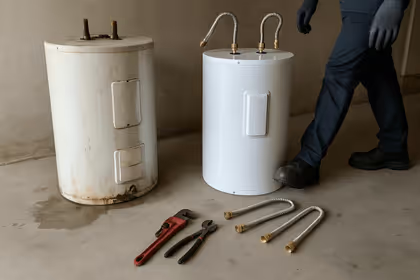





Doheny can replace the water heater you already have or help you move to a different system when the change makes practical sense. We start with the way your household uses hot water, then account for the unit's location, gas or electrical capacity, venting, drainage, and current code requirements. The recommendation stays tied to your home instead of a one-size-fits-all package.
Not every water heater problem calls for a new unit. A failed thermostat, heating element, thermocouple, igniter, valve, or other replaceable part may be worth repairing when the system is otherwise sound. Doheny also provides water heater repair in Orange County, and we'll explain both paths when repair and replacement are realistic options.
Replacement starts making more sense when you see one or more of these warning signs:
Our plumber checks the failure, the unit's condition, and the surrounding installation. You get an upfront repair price when repair makes sense and a replacement scope when it doesn't. Then you can weigh cost and reliability against how much useful life the existing equipment is likely to have left.
A straightforward replacement may be completed the same day when the right equipment is available and the surrounding installation is ready. Conversions or projects with utility and code upgrades can take longer. Doheny sets the timing during the assessment, before your old unit comes out.

We inspect the unit, confirm whether the problem points to repair or replacement, and ask how the household uses hot water. We also check the installation area, fuel source, venting, drainage, and connections that could affect the scope.
Your plumber explains the practical tank and tankless choices for the home, including capacity, efficiency, space, maintenance, and warranty considerations. You'll know about any supporting upgrades before you choose the equipment.
You see the recommended system and installation work before anything begins. We answer questions about code items, removal, timing, and how the new unit will differ from the old one.
Doheny disconnects and removes the old equipment, prepares the area, installs the replacement, and completes the required water, gas, electrical, vent, drain, and safety connections included in the scope. We protect the work area and haul away the old unit.
Before we leave, we test operation, check for leaks, confirm safe venting or electrical function, and make sure hot water is reaching the home. We'll show you the controls, explain the warranty and basic maintenance, and answer any last questions.
Either system can deliver reliable hot water when it's sized and installed correctly. The better choice depends on the house, the available utilities, and what matters most to you.
A traditional tank water heater may fit best when:
Tank units store a ready supply of hot water. Their main limitation is capacity: once the tank is depleted, it needs time to recover. They also continue maintaining the stored water temperature between uses.
A tankless water heater may fit best when:
Tankless equipment can provide continuous hot water, but it still has a maximum flow rate. Running several showers and appliances at once can exceed an undersized unit's capacity. Orange County's mineral-heavy water also makes routine descaling an important part of maintaining many tankless systems.
There isn't a universal winner. Doheny compares peak demand, installation requirements, maintenance expectations, available warranties, and the total project scope. If a tank-to-tank replacement is the practical choice, we'll say so. If tankless solves a real capacity, space, or efficiency problem in your home, you'll see exactly what the conversion requires.
.avif)
If your water heater is leaking, unreliable, or too small for your household, get a clear answer before the problem gets worse. Doheny Plumbing provides water heater replacement across Orange County with licensed installers, upfront pricing, and 24/7 availability for urgent failures.
The water heater itself is only part of the replacement price. Two homes installing the same nominal tank size can have different scopes because access, connections, venting, and code corrections differ. Doheny inspects the existing setup and gives you an upfront price before the replacement begins.
The main cost factors include:
System type and capacity. Standard tank, heat-pump, and tankless systems have different equipment and installation requirements. Larger tanks and higher-output tankless models generally cost more than smaller units.
Fuel source. Replacing gas with gas or electric with electric is often less involved than changing energy sources. A fuel conversion may require gas-line, electrical-panel, circuit, venting, or condensate work.
Tank-to-tankless conversion work. A tankless model may need a larger gas supply, new category-appropriate venting, a nearby power source, a condensate drain, and changes to hot and cold water piping. Those items should appear in the scope before you approve the job.
Location and access. A unit in an open garage is different from one in a tight closet, attic, interior cabinet, or exterior enclosure. Stairs, finished surfaces, limited working clearance, and the effort required to remove the old tank can affect labor.
Code and safety upgrades. Seismic strapping, drain pans, discharge piping, expansion control, venting, combustion air, shutoff valves, and permit or inspection requirements can all shape the installation. The exact needs depend on the home and local authority.
Warranty and efficiency level. Equipment with higher efficiency ratings, upgraded components, or longer manufacturer coverage can carry a higher upfront price. We explain the differences so you can decide whether the added cost has value for your expected time in the home.
Related damage or plumbing repairs. Corroded valves, damaged platforms, leaking connectors, or water damage around the old unit may need attention before the replacement can be completed safely.
You should know what's included, what's optional, and what could change before work starts. Doheny's quote covers the agreed equipment and installation scope; essential code work won't be buried behind a low teaser price.
.avif)
.avif)
With decades of experience in Orange County, we've established ourselves as the trusted choice for water heater replacement services.
.svg)
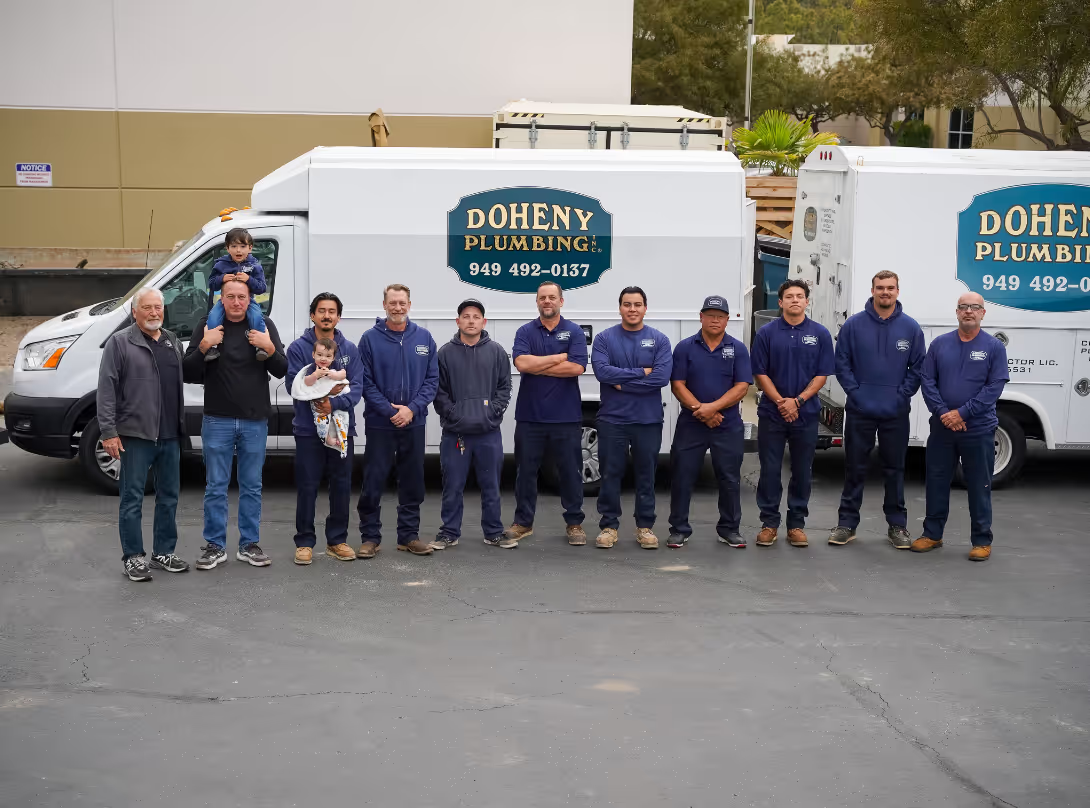
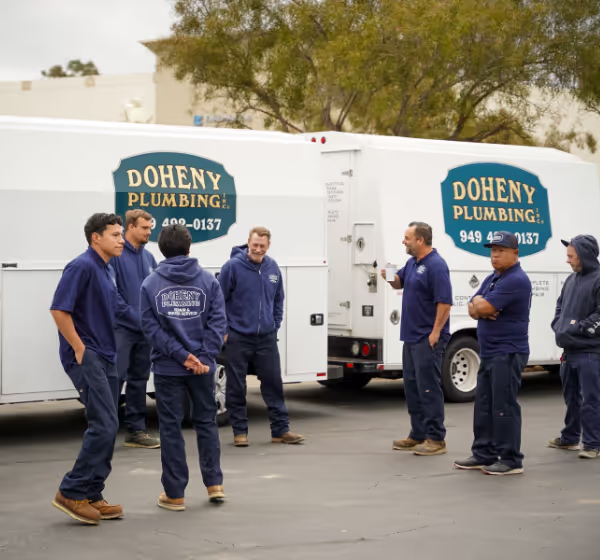
Doheny is a family-owned plumbing company with decades of experience in local homes. That history comes in handy when a replacement exposes old venting, tight utility spaces, unusual piping, or work from an earlier remodel.
Water heaters involve pressurized water, gas or high-voltage electrical service, heat, and exhaust. Our trained plumbers install the system as a complete working assembly, not just a tank connected to two pipes.
A leaking tank or total loss of hot water doesn't always happen during business hours. Doheny offers emergency availability with a 30-minute response target, and same-day replacement may be available based on the unit and scope.
If a sound unit needs a reasonable repair, we'll explain that option. When corrosion, age, recurring failures, or a major component point to replacement, we'll explain that just as plainly.
We compare the systems around your household, not a sales quota. That includes capacity, available utilities, maintenance, warranty, efficiency, and the real work needed for a conversion.


How do I know if I should repair or replace my water heater?
A repair can make sense when the unit is otherwise in good condition and the failed part is replaceable. A leaking tank body, heavy corrosion, repeat breakdowns, major component failure, or insufficient capacity all tilt the decision toward replacement. Doheny can price the realistic options and explain how much useful life the existing equipment likely has left.
Can Doheny replace both tank and tankless water heaters?
Yes. We replace traditional tank and tankless systems and can evaluate a tank-to-tankless conversion. The right scope depends on fuel type, capacity, gas or electrical service, venting, drainage, water connections, and the installation location.
How long does water heater replacement take?
Many like-for-like replacements can be completed in a day when equipment is available and the existing installation is ready. Tankless conversions, fuel changes, difficult access, or projects that need utility and code upgrades may take longer. Your plumber will explain the expected timing after seeing the setup.
What size water heater does my home need?
Tank sizing depends on household size, fixtures, simultaneous use, and how quickly the unit recovers. Tankless sizing depends on the total flow needed at one time and the temperature rise the system must produce. Doheny calculates around actual demand so you don't end up with too little capacity or unnecessary equipment.
Is tankless always better than a traditional tank?
No. Tankless can save space and provide continuous hot water, but it may require a more involved installation and regular descaling. A tank system can be the simpler and more economical choice when it already meets the home's needs. The best option is the one that fits the house and the way your family uses hot water.
What is included in a water heater replacement quote?
For water heater replacement, look for the equipment, removal and haul-away, labor, connections, included safety or code items, and any supporting upgrades. The written scope should also explain optional choices and the warranty. Doheny reviews it with you before installation begins.
Do I need a permit for water heater replacement in Orange County?
Permit and inspection rules vary by city and project scope. The installation also needs to meet applicable requirements for items such as seismic restraint, venting, discharge piping, drainage, and clearances. Doheny will identify the requirements that apply to the home during the assessment.
What should I do if my water heater is leaking now?
Keep away from hot water and electrical hazards. If you can do so safely, shut off the water supply to the unit and use the appropriate gas or electrical shutoff; don't enter standing water near electrical equipment.