%20(1).avif)
Plumbing
Plumbing


Sewer & Drain
Sewer & Drain
Water Heaters & Treatment
Water Heaters & Treatment
Contact Us
Contact Us
Contact Us
Contact Us
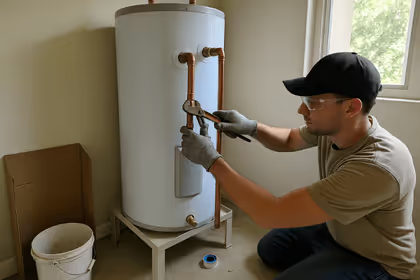





We've installed thousands of water heaters across Orange County, and the process is the same whether it is a planned upgrade or a 2 a.m. emergency.

A licensed technician inspects your current water heater, checks the gas line, venting, electrical, and installation location, and reviews your household's hot water needs. You receive a written price for each option we recommend before any work starts.
We confirm the model, capacity, and any code upgrades, and schedule the installation. Standard tank replacements are usually completed the same day; tankless conversions and heat pump installations are typically scheduled within a few days so materials and venting are on hand.
We shut off the water, gas, or power, drain the old unit, disconnect it, and haul it away for proper disposal. We clean the installation area and replace any pan, straps, or venting that don't meet code.
We set the new water heater, connect it with new flex lines and a sediment trap, strap it, fit the T&P drain line and expansion tank, vent it, and pressure test the whole system. We follow the manufacturer's installation instructions exactly so the warranty stays valid.
We fill and fire the unit, check for leaks and proper combustion, set the temperature, and schedule the city inspection. Before we leave, we show you the shutoff valves, the temperature setting, and the simple maintenance that extends the unit's life.
The right water heater depends on how much hot water your household uses at once, what fuel and venting you already have, and how long you plan to stay in the home. Here's how the three options compare for Orange County homes.
Storage tank water heaters hold 40 to 75 gallons of heated water ready to go. They cost the least up front, install quickly as a like-for-like swap, and are the right answer for most households replacing an existing tank. The trade-off is standby heat loss and a finite supply; a 40 gallon tank can run short when two showers and a dishwasher run together. Expect 8 to 12 years of service with annual flushing.
Tankless water heaters heat water as it passes through the unit, delivering an endless supply at a set flow rate. They last 20 years or more, cut water heating energy use by roughly a quarter, and mount on a wall. The installation is more involved: most Orange County homes need an upsized gas line, new stainless venting, and sometimes a recirculation pump for distant bathrooms. Tankless makes the most sense for larger families, homes with high simultaneous demand, or owners planning to stay long enough to recover the higher installed cost.
Heat pump water heaters pull heat from the surrounding air into a storage tank, using 60 to 70 percent less electricity than a conventional electric tank. They're the most efficient option on the market and the one most utility and federal incentives target. They need about 700 cubic feet of air space, a condensate line, and a 240V circuit, and they cool the space they sit in slightly, which is fine in a garage and less welcome in a hallway closet.
Not sure which fits? Our technician will look at your current setup, your fixture count, and your gas and electrical capacity and give you a straight recommendation with pricing for each option.
Undersizing is the most common installation mistake we see, and it's why so many homeowners believe their water heater "never worked right." Sizing comes down to two numbers.
For a tank water heater, the number that matters is first-hour rating: how many gallons of hot water the unit can deliver in a busy hour starting with a full tank. A rough guide for Orange County households:
For a tankless water heater, we size by flow rate in gallons per minute and by temperature rise. Orange County groundwater arrives at roughly 60 to 65 degrees, so reaching a 120 degree setpoint requires a 55 to 60 degree rise. A shower and a kitchen faucet running together need about 4 to 5 GPM at that rise; add a second shower and you are at 6 to 7 GPM, which calls for a larger unit or two units in tandem.
We also check the physical space, the height of the installation location, gas line diameter, and the electrical panel before quoting, so nothing comes up on installation day that wasn't in the quote.
A water heater swap looks simple, but California Plumbing Code and Orange County building departments require several items a bargain installer will skip. Every Doheny Plumbing installation includes them.
Permit and inspection. Nearly every water heater replacement in Orange County requires a plumbing permit from the city (or OC Public Works for unincorporated areas). We pull the permit and schedule the inspection as part of the job.
Seismic strapping. California requires two straps on every tank water heater, one in the upper third and one in the lower third, anchored to studs or masonry. Orange County sits near the Newport-Inglewood fault, and inspectors check this first.
Temperature and pressure relief valve with drain line. The T&P valve protects against a pressure buildup and must discharge through a properly sized line to an approved location, never capped or routed uphill.
Drain pan and drain line. Any water heater installed above living space or in a location where a leak would cause damage sits in a pan that drains to the exterior or an approved receptor.
Thermal expansion tank. Most Orange County homes have a pressure regulator or backflow device on the main, which creates a closed system. An expansion tank absorbs the pressure spike when water heats, protecting the tank and your fixtures.
Proper venting and combustion air. Gas water heaters need correctly sloped, sealed venting and adequate combustion air. Tankless units require their own stainless or PVC venting per the manufacturer.
Bonding, shutoff, and flex connectors. The hot and cold lines are bonded, a dedicated shutoff valve is installed on the cold supply, and we use code-approved flexible connectors and a sediment trap on the gas line.
We do this on every job, not as an upsell, because it's what keeps your warranty valid and your home safe.
We give every customer a written price before work starts, and we don't add fees after the fact. The final number depends on a handful of factors, and knowing them ahead of time helps you compare quotes fairly.
An efficient water heater earns money back beyond the monthly utility bill. Ask us which models qualify when you book.
Rebate programs change often. We'll tell you what applies to the unit you choose and point you to the application.
.avif)
.avif)
With decades of experience serving Orange County homeowners, we're your trusted partner for reliable water heater installation. Here's what sets us apart.
.svg)
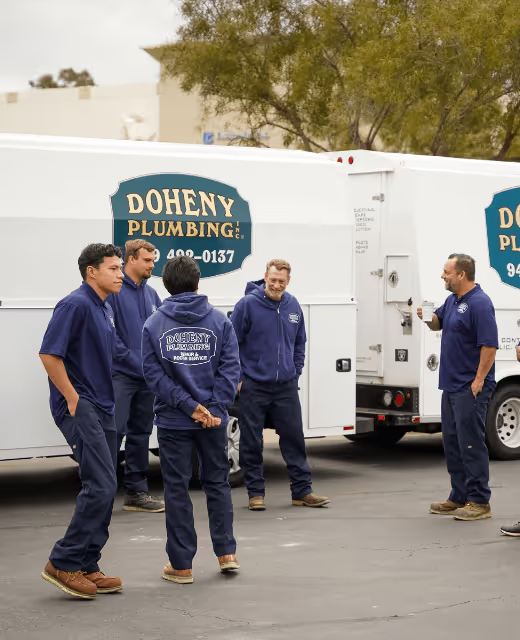
Doheny Plumbing has served Orange County since the 1980s. We're large enough to handle any installation and small enough to remember your name, and most of our work comes from repeat customers and referrals.
A California-licensed Doheny plumber, not a subcontractor, performs every installation, and our workmanship guarantee backs the work on top of the manufacturer warranty.
We answer the phone around the clock and stock common tank sizes so a failed heater doesn't mean days without hot water.
We pull the permit, install to California Plumbing Code, and coordinate the inspection. You never have to deal with the city.


How long does water heater installation take?
A like-for-like tank replacement usually takes two to three hours. A tank-to-tankless conversion takes six to eight hours because of the gas line, venting, and electrical work involved. Heat pump installations fall in between depending on the electrical work needed.
Do I need a permit to replace a water heater in Orange County?
Yes. Nearly every city in Orange County requires a plumbing permit for a water heater replacement, and unincorporated areas go through OC Public Works. Doheny Plumbing pulls the permit and schedules the inspection as part of every installation.
How do I know when to replace instead of repair?
If the tank itself is leaking, replacement is the only option. If the unit is more than 10 years old, or a repair would cost more than half of a new installation, replacement is the better value. For a leaking fitting, a failed thermocouple, or a bad heating element on a younger unit, repair usually makes sense.
What size water heater does my home need?
Most two to four person households are well served by a 50 gallon tank. Larger families, homes with a soaking tub, or homes with multiple showers running at once should consider a 75 gallon tank or a tankless unit. We measure your needs before recommending a size.
Is a tankless water heater worth it in Orange County?
For households that run out of hot water, want to free up garage or closet space, or plan to stay in the home for many years, yes. The installed cost is higher than a tank, but the unit lasts roughly twice as long and uses less energy. For a small household replacing a working tank on a budget, a new tank is often the better fit.
Can I get a rebate for a new water heater?
Heat pump water heaters qualify for a federal tax credit of up to $2,000, and SoCalGas and SCE offer rebates on qualifying efficient models. We'll tell you which incentives apply to the unit you choose.
What brands of water heaters do you install?
We install the major residential brands and recommend models based on reliability, warranty, and parts availability in Orange County. Ask your technician for current recommendations for your type and size.
Do you offer emergency water heater installation?
Yes. Doheny Plumbing is available 24/7 and can complete most standard tank replacements the same day you call. If a heater fails overnight, call 949-492-0137 and we'll get a technician out.
How do Orange County's hard water conditions affect a new water heater?
Orange County water is hard, which means mineral scale builds up in tanks and tankless heat exchangers faster than in many regions. Annual flushing extends the life of a tank, and tankless units benefit from a descaling every one to two years. A whole-home water softener protects the heater and every other fixture in the house. Learn about water softeners.
.avif)