%20(1).avif)
Plumbing
Plumbing


Sewer & Drain
Sewer & Drain
Water Heaters & Treatment
Water Heaters & Treatment
Contact Us
Contact Us
Contact Us
Contact Us
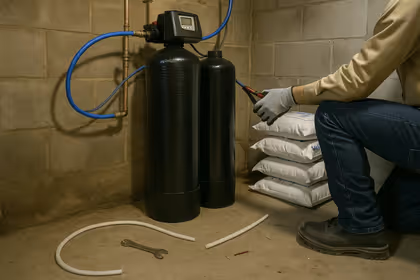





A water softener works best when the equipment matches the home's hardness level and daily demand. Doheny handles testing, plumbing, installation, and long-term service. One team takes care of the equipment and the pipes around it.
Yes, although the exact hardness depends on the city, water source, season, and local provider. The City of Santa Ana reports water at about 250 parts per million, or roughly 15 grains per gallon. Irvine Ranch Water District explains that its supply blends Colorado River water, Northern California water, and local wells, so customers may notice changes in mineral content during the year. IRWD considers water at 10 grains per gallon or more hard.
Hardness comes mainly from dissolved calcium and magnesium. Those minerals aren't a drinking-water safety problem, but they can leave scale wherever water is heated, evaporates, or sits on a surface. Common signs include:
A hardness test tells us if minerals are behind these symptoms and gives us the starting point for system sizing. We test before recommending equipment because two Orange County homes can receive different water blends and use very different amounts of water.
The names are often used as if they mean the same thing, but a true water softener and a water conditioner solve hard-water problems differently.
A salt-based water softener removes hardness minerals. Its resin captures calcium and magnesium through ion exchange, then regenerates with a brine solution. Because the minerals are removed from the water, a softener is the stronger choice when the goal is softer laundry, better soap performance, fewer spots, and protection against scale throughout the plumbing system. It requires salt or potassium and periodic regeneration.
A salt-free water conditioner changes how minerals behave. It reduces their ability to form hard scale on plumbing and equipment, but it doesn't remove calcium and magnesium or produce technically soft water. A conditioner may suit homeowners who want scale control without adding salt or managing a brine tank. It may not change lather, spotting, or water feel in the same way.
We'll compare the hardness test, the problems you want to fix, household water use, maintenance preferences, and any local discharge considerations. Doheny explains both approaches plainly; a conditioner isn't mislabeled as a softener. For more on the salt-free option, review our water conditioner services.

The largest unit on the shelf isn't automatically the right one. An undersized softener can regenerate too often and run out of capacity during heavy use. An oversized or poorly programmed system may waste salt and water. We size the system around measured hardness and the people, fixtures, and routines in the home.

We measure hardness before treated water reaches the plumbing. If the home has other water-quality concerns, we discuss them separately so the softener isn't expected to do a filter's job.
The number of residents matters, but so do large tubs, multiple showers, frequent laundry, guest use, and other high-demand fixtures. We use the test result and expected daily use to determine the appropriate grain capacity and regeneration schedule.
Our plumber checks the main line, available space, drain route, electrical access, shutoff, and bypass arrangement. We also look at the existing equipment if this is a replacement.
We explain the recommended system, what it will and won't treat, its maintenance needs, and the full installation scope. You'll see the price before work starts.
We connect the equipment, set the controls for the home's water and usage, run the system through its startup procedure, check every connection, and test the treated water. Before leaving, we show you how to check salt, use the bypass, and recognize a problem.
Water softener cost varies with the equipment and plumbing work each home needs. We quote the actual system and installation scope after seeing the site.
The main cost factors include:
Doheny provides transparent, upfront pricing after testing the water and inspecting the site. That gives you a usable number and a clear scope, including any plumbing changes, instead of a low equipment-only price that grows during installation.
Most salt-based water softeners need a few homeowner checks and periodic service. There isn't one schedule for every unit; equipment, water use, hardness, salt type, and manufacturer instructions all play a part.
Check the brine tank about once a month until you understand how quickly your household uses salt. Keep the level within the range in the owner's manual and break up only loose surface crust. A solid salt bridge can make a tank look full even though the system can't draw brine. If the salt is mushy, unusually wet, or forming a hard shelf, call for service instead of forcing it apart and damaging the tank.
Watch for a return of hard-water symptoms. New spots, poor lather, scale, or a change in water feel can signal low salt, a missed regeneration, a blocked injector, a brine-line problem, incorrect settings, or aging resin. Also check around the unit for leaks and make sure stored items aren't pressing against the drain or brine tubing.
During a maintenance visit, we can test hardness before and after treatment, inspect the valve and bypass, clean the injector or brine components, review regeneration history and settings, and check the resin and controls. Doheny also repairs softeners that use too much salt, regenerate constantly, leave standing water in the brine tank, make unusual noises, or stop producing soft water.
.avif)
.avif)
A water softener becomes part of the home's plumbing system. The job calls for an accurate test, correct sizing, sound connections, a safe drain setup, and controls programmed for the incoming water. Doheny handles each of those pieces.
.svg)
Our family-owned company understands the area's mixed water sources and the scale problems local homeowners see in fixtures, water heaters, and appliances.
We install the equipment and handle the plumbing around it, so you have one accountable team for the system, bypass, drain, shutoffs, and connections.
We don't size a system by guessing from the number of bedrooms. We test the water and discuss how the household actually uses it.
Doheny can install, program, maintain, and repair the system over its working life. When something changes, you know who to call.





Look for white scale, spotted dishes, stiff laundry, poor soap lather, or mineral buildup around fixtures. A hardness test gives you the level at your home and shows whether a softener or conditioner fits the problem.
Much of Orange County receives hard water, but the level varies by city, provider, season, and source blend. Santa Ana reports about 15 grains per gallon, while IRWD notes that its hardness can change as imported water and local well water are blended. Testing your tap is more useful than relying on a countywide average.
A salt-based softener removes calcium and magnesium through ion exchange. A salt-free conditioner is intended to reduce scale formation without removing those minerals, so it may not change spotting, lather, or water feel in the same way.
Sizing starts with the hardness level and expected daily water use. Household size, peak demand, large fixtures, and regeneration efficiency all matter; bedroom count alone isn't enough to choose the correct grain capacity.
Capacity, controls, plumbing access, drain and electrical needs, and old-equipment removal all affect the installed price. Doheny tests the water and inspects the location before giving you an upfront quote.
Salt use changes with household demand, hardness, capacity, and regeneration settings. Check the brine tank monthly at first and follow the equipment manufacturer's fill guidance rather than topping it off on a fixed schedule.
A salt bridge, clogged injector, brine-line restriction, control problem, or incorrect regeneration setting can stop normal salt use. If the tank stays full while hard-water symptoms return, the unit should be inspected.
Not by itself. A conventional softener targets hardness minerals. Chlorine, taste, odor, sediment, and specific contaminants are filtration questions, so those concerns should be tested and treated separately.
You can check the salt and watch for leaks or returning hard-water symptoms. A service visit verifies hardness reduction and checks the valve, brine system, settings, and working parts before a small problem shuts the unit down.


.avif)